THE BEATLES COLLECTION
Parlophone BC 13 / PSLP 261
Released 29 November 1978
Original recommended retail price: $89.00
Released in November 1978 as a 2,000-copy limited edition, The Beatles Collection united the twelve original UK studio albums with a bonus Rarities LP and proved so popular that it remained available in evolving Australian box designs for a decade.
Labels & Related Material
Overview
The Beatles Collection offered Australian buyers the group’s twelve original British stereo studio albums in one package, together with a Rarities LP gathering recordings absent from those albums. What began as a limited international release became one of EMI (Australia)’s most durable Beatles products.

The first Australian sets appeared on 29 November 1978 at $89.00. Standard locally available LPs were packed into British-made flip-top boxes, with the newly manufactured Rarities disc carrying a generic cream EMI label. Only 2,000 sets were issued in this configuration.

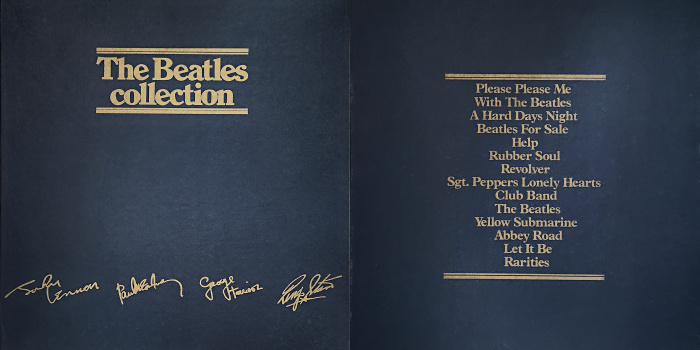
Demand encouraged EMI (Australia) to place the collection on full release in April 1979. It adopted Rarities’ catalogue number, PSLP 261, and introduced an Australian-made, textured dark-blue box with a lift-off lid. The title and the four Beatles’ signatures were printed in gold. Once the initial Rarities stock was exhausted, subsequent pressings appeared on orange Parlophone labels.

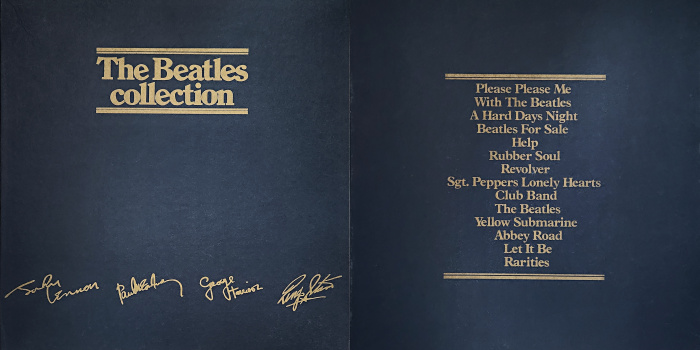
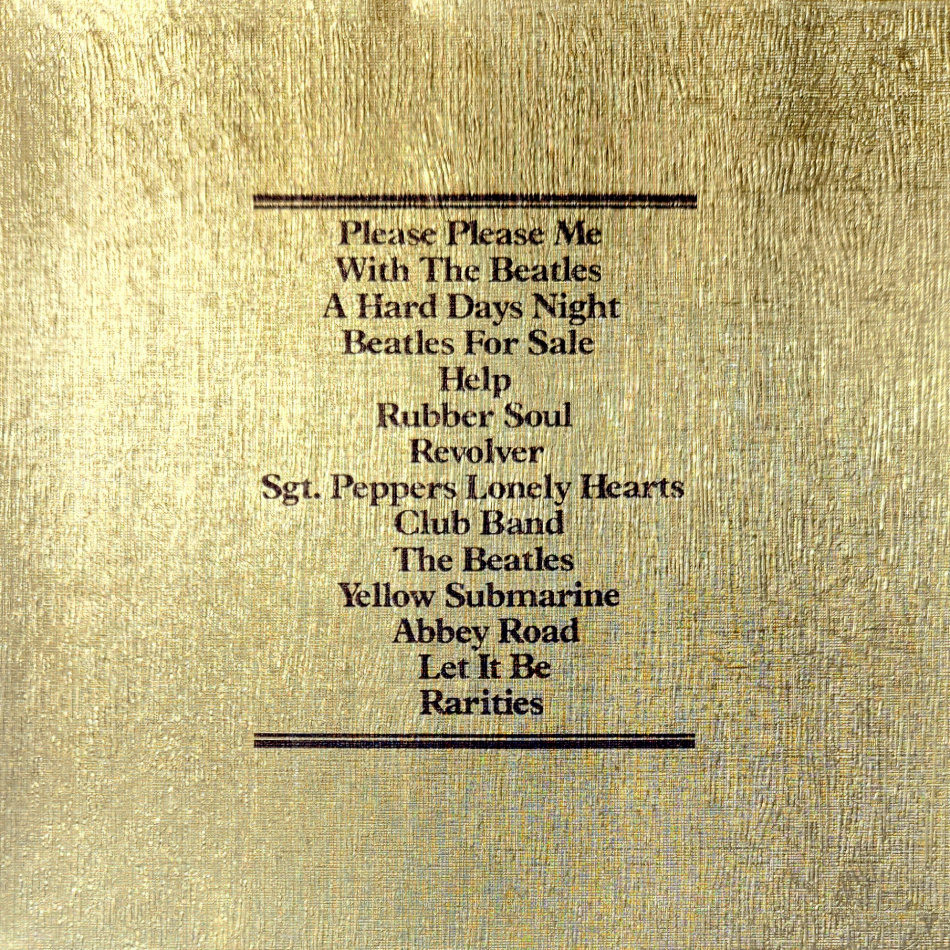
The contents remained ordinary production stock, so sleeve, label and matrix variations depended on when each box was assembled. From mid-1980, the box lost its texture and gained a centrally positioned gold list of album titles on its base. From mid-1981, EMI (Australia) supplied the sets sealed. By then, the recommended price was $109.00, although World Record Club members could buy it for $91.50; contemporary offers appear on the Promotional Material page.

Unlike Britain, Australia never received a separate official release of the UK Rarities LP. Retailers nevertheless sometimes split the boxes, enabling collectors to buy that disc without purchasing twelve albums they already owned.

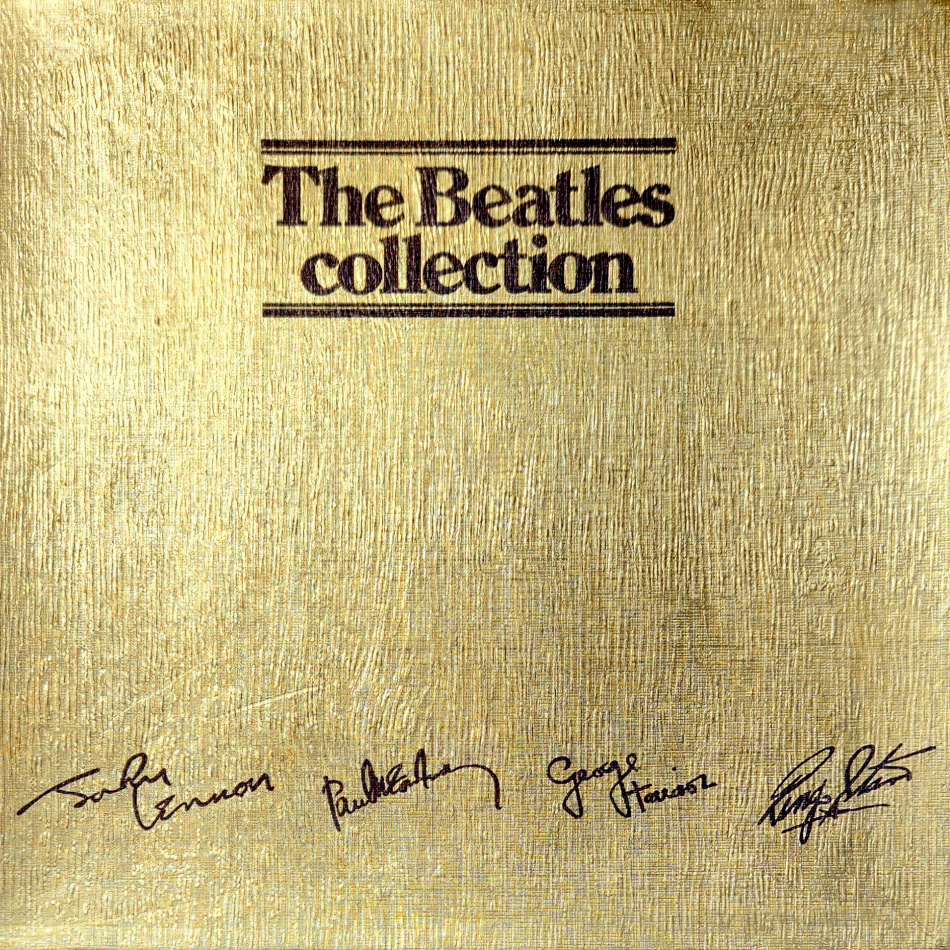
By mid-1980, more than 25,000 sets had sold—325,000 individual LPs. ATV Northern Songs, the Beatles’ Australian publisher, marked the six-platinum achievement by presenting EMI (Australia) with a gold box. Four years later, EMI (Australia) issued a textured gold-coloured version of the collection, officially celebrating that success. Phil Israel recalled a more immediate commercial motive:

“The gold box was released as a limited release because at the time EMI needed extra sales to keep the finance people happy. We linked it in by celebrating the blue box set had gone gold - but in reality, it was all about the money”.

EMI UK was reportedly unimpressed by the repackaging but allowed it to proceed.

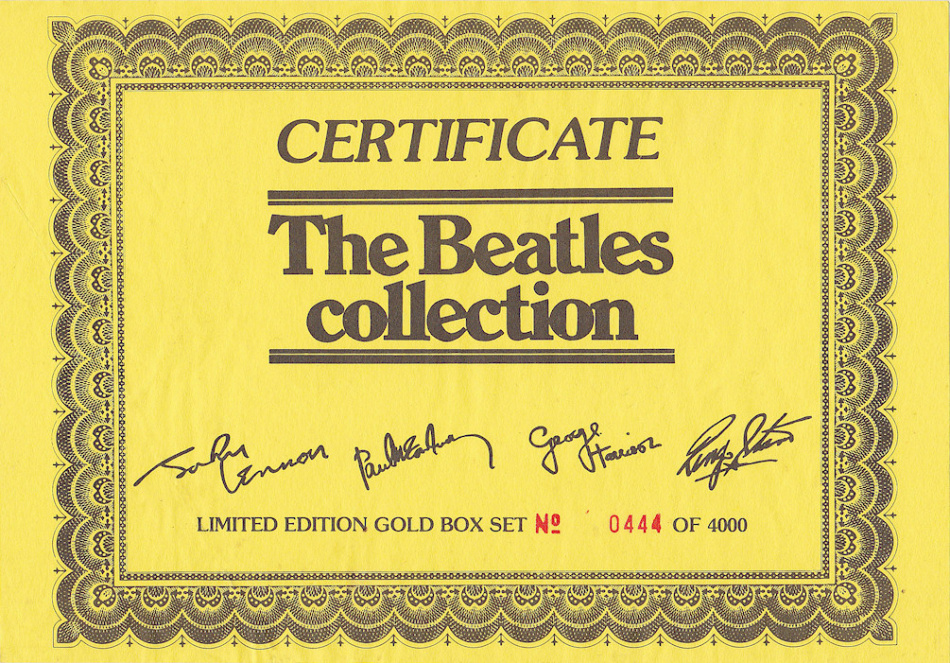
Each gold box included a numbered yellow certificate reading “LIMITED EDITION GOLD BOX SET No 000# OF 4000”. Surviving evidence suggests that sales exceeded 4,000 sets. It also contradicts the familiar story that poor construction caused an immediate withdrawal: the gold edition remained on sale well into the second half of 1987. In July, Record Clubs of Australia, successor to the World Record Club, offered LP and cassette sets for $99.99 plus $6.00 postage alongside the new CDs. EMI was still advertising it as a Christmas gift in October. These advertisements appear on the Promotional Material page.
Both Australian lift-off boxes were prone to split lid corners, while the gold covering also peeled badly. Consequently, near-mint gold boxes are particularly uncommon. The standard blue version remained available in parallel and continued as the principal collection until December 1988, when the digitally remastered catalogue arrived in a British-made wooden roll-top cabinet. That successor added Magical Mystery Tour, the two-disc Past Masters and a glossy fifty-nine-page book.

Between April and December 1988, cassette editions of the earlier collection contained digitally remastered tapes except for Rarities. Across 1978–1988, approximately 80,000 sets were sold. The collection first entered the charts in December 1979, a year after release, reaching No. 33 during eleven weeks. It returned two weeks after John Lennon’s death in December 1980, reaching No. 38 during a further eight weeks.

Visit the individual album pages for details of the records included, and the Promotional Material page for the contemporary sales and award material.